The way in which we deal with the sphere providers enterprise is altering — and quick.
From drones surveying building websites to predictive upkeep anticipating tools failure upfront, know-how continues to evolve and combine deeper into building workflows.
Though there’s a staggering 75% labor scarcity within the US, the market dimension for area service administration is seeing unprecedented development and is predicted to achieve $8.59 billion by 2029, rising at a CAGR of 11.70%.
Subject service administration primarily entails dispatching educated employees or contractors to off-site places to ship providers to purchasers, akin to tools installations, upkeep, or repairs. Behind the scenes, managers oversee the group’s area sources and coordinate the duties carried out by these professionals.
Nonetheless, even essentially the most proficient area employees require steerage and fundamental administrative assist. Correct area service administration enhances retention charges, yields value financial savings, and elevates the client expertise.
Let’s have a look at the tendencies driving the expansion on this business.
Subject service administration tendencies: how will it remodel the panorama?
Staying abreast of business tendencies is advantageous. By actively monitoring rising applied sciences and evolving buyer expectations, corporations can adapt swiftly to altering market dynamics and stay related and attentive to buyer wants.
Furthermore, by embracing tendencies, corporations can enhance service supply and achieve a major aggressive benefit.
The business is present process a giant change pushed by technological progress and a rising want for environment friendly service supply. As we step into 2024, a number of tendencies within the area service administration business are reshaping how organizations perform and work together with their clientele.
Listed here are the seven key tendencies that may dominate the sphere service business.
1. Geofencing for computerized time monitoring
Guide or paper-based strategies for time monitoring at the moment are turning into outdated. The business is shifting to automated time monitoring whereas additionally leveraging location monitoring.
An rising side of automated time monitoring is geofencing. Geofencing makes use of GPS to determine a digital perimeter round predefined areas, akin to works websites. It capabilities akin to a digital fence, alerting directors by way of notifications when people enter or exit such areas. It gives real-time updates on personnel actions at every location and eliminates guesswork and dear errors in crew administration.
Interactive voice response (IVR) and QR codes supply extra flexibility to time monitoring.
IVR methods enable workers to clock out and in utilizing a easy cellphone name, which could be notably helpful for distant area employees with out entry to computer systems or smartphones. This methodology permits real-time monitoring of labor hours by way of voice instructions or keypad inputs.
However, QR code-based time monitoring entails workers scanning a novel QR code upon arrival at and departure from the work website. This methodology verifies the situation and time of worker attendance. This additional ensures accountability and compliance in environments the place workers may work throughout a number of places inside a job website/constructing or have to report time spent on particular duties or tasks.
On the executive aspect, managers can save time with lowered paperwork. Nonetheless, whereas these developments streamline administrative processes, you will need to think about potential challenges like information privateness and safety and put together with methods to mitigate them.
The supervisor dashboard can visualize worker check-in information, which helps establish tendencies. This information can support in figuring out tendencies in worker conduct and refining work schedules for optimization functions.
Supply: allGeo
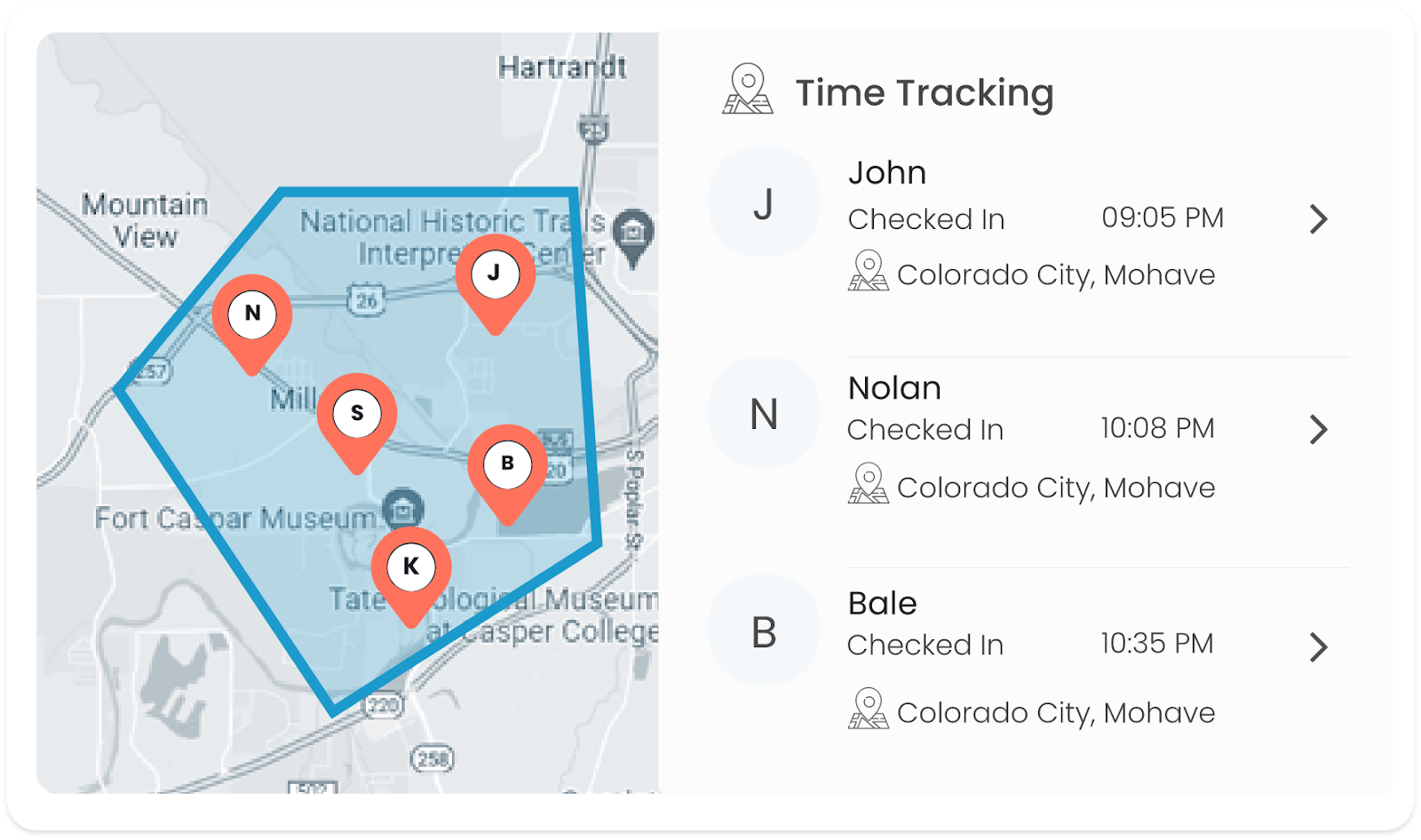
Geofenced time monitoring in services administration business
The services administration business can vastly profit from geofenced time monitoring apps, notably in situations requiring exact monitoring of on-site actions. Allow us to think about the case of a business property administration firm answerable for sustaining a number of workplace buildings throughout a metropolis.
With geofenced time monitoring, the corporate can effectively handle their upkeep workers dispersed throughout numerous places.
For example, think about a property supervisor needing to schedule routine upkeep duties, akin to HVAC inspections, at one in all their workplace buildings. By utilizing a geofence time monitoring app, the supervisor can designate particular geofenced zones round every constructing. When upkeep technicians arrive on the designated space, the app robotically triggers their time clock, precisely recording their arrival and departure instances.
Furthermore, within the occasion of emergencies or pressing restore requests, geofenced time monitoring permits the property supervisor to rapidly establish and dispatch the closest obtainable technician to the affected constructing.
Geofencing know-how permits the services administration firm to optimize useful resource allocation and reduce response instances.
Whereas geofencing time monitoring presents clear advantages within the services administration business, potential limitations could come up with its implementation. Components akin to GPS accuracy and sign interference could affect response instances.
These points could be mitigated with correct planning and integration of measures like strategically inserting GPS antennas or utilizing sign amplifiers for GPS sign optimization.
2. Give attention to worker expertise and employee security
Based on OSHA, there have been 5,486 work-related fatalities, translating to a fee of three.7 fatalities per 100,000 full-time equal employees. Lone employees working in distant places wrestle to entry help following accidents. This statistic is alarming, as such incidents are completely avoidable.
In gentle of those alarming statistics, there was an elevated concentrate on worker expertise and security. Coupled with stricter compliance and regulation necessities, lone employee security apps are taking priority over conventional security measures.
Regardless of the developments in security tools and gears, a major problem is the varied nature of lone work environments, which varies by location, business, and job complexity. Protecting put on could not suffice in all conditions.
Employers should think about elements akin to entry to risk escalation, communication, and worker privateness issues when implementing lone employee security measures.
That is the place technological options change into indispensable. Lone employee security administration encompasses safeguarding people who function independently, with out direct oversight or instant support.
A lone employee security app provides a complete answer by combining GPS monitoring, two-way communication, and emergency response options right into a single platform.
Security apps for employee safety in building business
Within the building business, employees usually discover themselves in hazardous conditions, akin to working at heights, in confined areas, or with heavy equipment.
In 2022, employees in building and extraction occupations skilled the second-highest variety of fatalities, totaling 1,056, amongst all occupation teams. The fatality fee for this occupation group rose from 12.3 deaths per 100,000 full-time equal (FTE) employees in 2021 to 13.0 in 2022.
If a lone employee encounters hazard on a building website, like dropping a software and practically falling off the scaffold, they’ll set off the SOS alarm on their security app. Some apps facilitate this characteristic by merely urgent the cellphone’s energy button 4 instances. This instantly alerts emergency contacts and the central monitoring system.
Additional, the employee could be rapidly positioned on the development website with a GPS monitoring system that enables real-time monitoring.
The lone employee security app robotically logs the triggering of the SOS alarm, offering a digital report of the emergency incident. Moreover, security apps usually supply digital checklists and incident reporting instruments, enabling building corporations to take care of data of security inspections, hazard assessments, and incident investigations, all important for OSHA compliance.
3. Actual-time monitoring
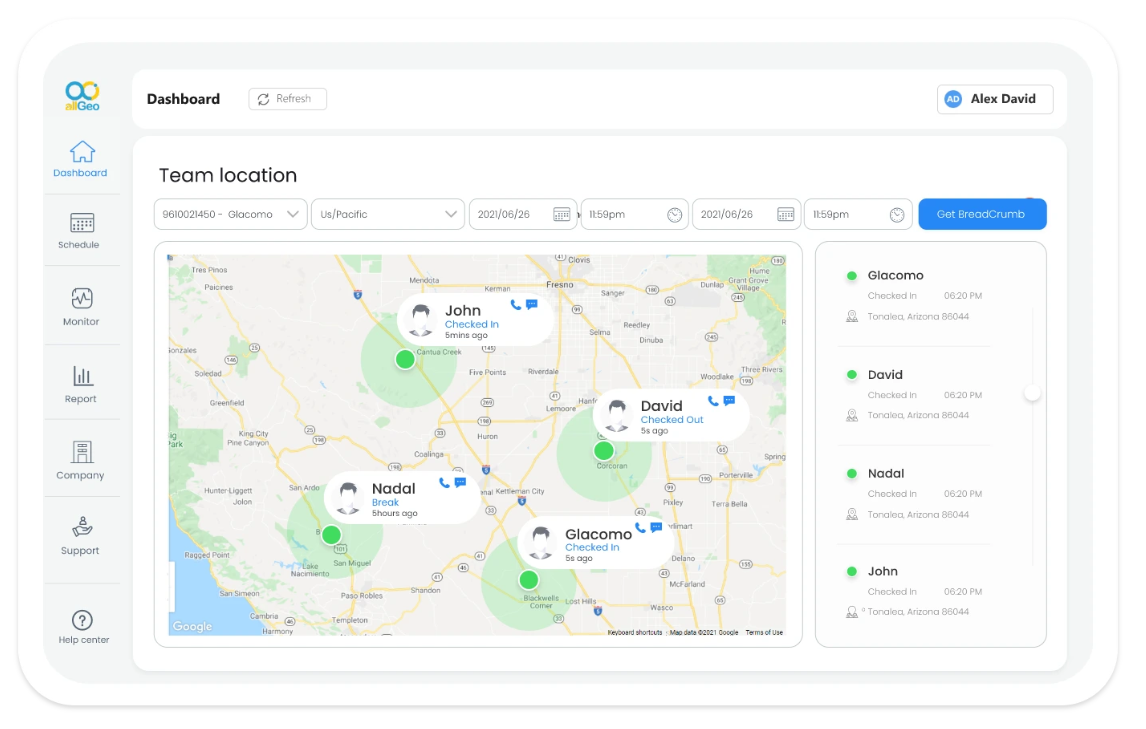
Actual-time monitoring in area providers is turning into more and more essential with the demand for fast decision-making. Subject service professionals, distant employees, and venture managers require instant entry to data from the sphere to optimize operations and guarantee venture success.
Conventional strategies, akin to paper reporting and handbook information entry into spreadsheets, usually lead to delays and errors.
Actual-time monitoring software program streamlines information assortment and reporting processes, permitting for fast entry to crucial data. By securely coming into information from the sphere right into a centralized platform, redundant information entry is eradicated, lowering prices and rising profitability.
Furthermore, the information collected by way of real-time monitoring can be utilized to establish tendencies and patterns of worker exercise. This helps corporations stop fraud, time theft, and lack of productive hours.
Supply: allGeo
Actual-time monitoring in residence healthcare business
Actual-time monitoring performs a major position within the residence healthcare business. It may give managers priceless insights into caregiver actions, which helps guarantee the standard and accuracy of the providers delivered to the sufferers.
With a real-time monitoring system, managers can observe caregivers’ location, confirm their arrival and departure instances at every affected person’s residence, and monitor the providers offered in real-time. For example, if a caregiver claims to have spent a number of hours with a affected person, however their location information signifies in any other case, it raises a purple flag for potential fraudulent exercise.
Furthermore, real-time monitoring permits managers to cross-reference caregiver schedules with affected person visits, guaranteeing providers are delivered precisely and billed as scheduled. Any discrepancies or irregularities could be promptly addressed, stopping fraudulent claims for providers not rendered.
The power to detect and forestall fraud in actual time safeguards the enterprise’s monetary integrity and upholds its repute for delivering dependable and moral care to susceptible people and their households.
4. Predictive analytics for useful resource planning
Predictive analytics is revolutionizing useful resource planning for area service administration. Organizations are figuring out and leveraging patterns inherent in information to uncover each dangers and alternatives. By analyzing historic information and utilizing superior algorithms, it may possibly forecast service calls for, optimize useful resource allocation, and improve operational effectivity.
For example, predictive analytics can analyze historic information on technician efficiency, customer support requests, and tools upkeep schedules to anticipate potential points or service wants. This method permits area service managers to make sure the precise technician is dispatched to every job.
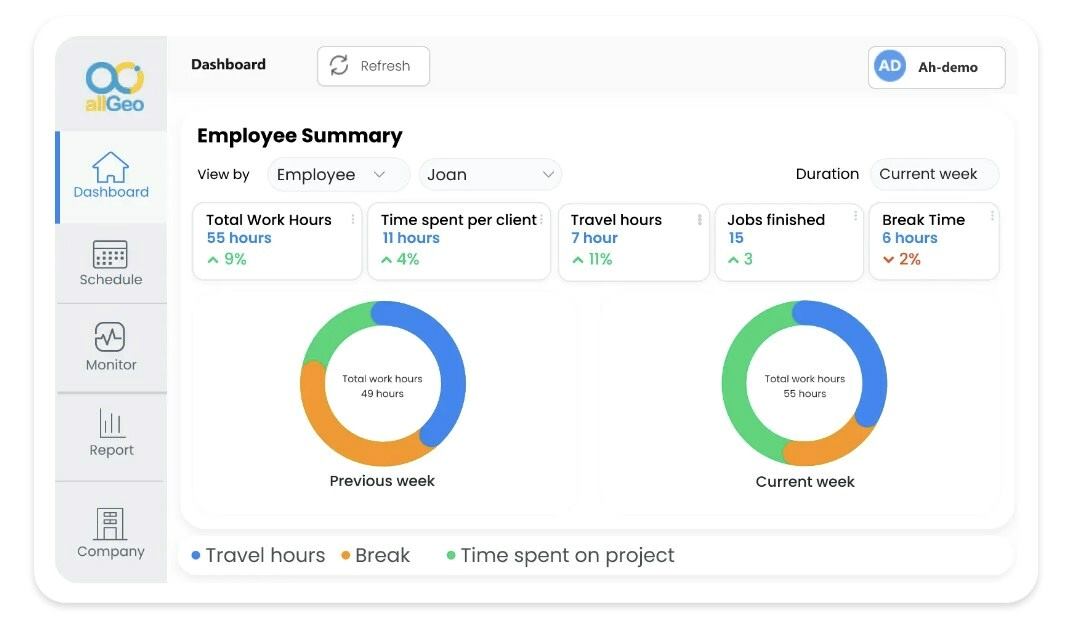
A job scheduling app enhanced with predictive analytics capabilities revolutionizes scheduling optimization by leveraging historic information on worker efficiency, job places, and repair calls for to forecast future scheduling wants precisely.
With options like dispatching shift particulars and real-time monitoring, companies can effectively allocate sources and make data-driven choices to maximise workforce productiveness.
Supply: allGeo
Predictive analytics in janitorial providers
For a janitorial providers enterprise, predictive analytics can analyze historic information on cleansing necessities, such because the frequency and length of duties at completely different places, seasonal differences, and particular occasion schedules. Based mostly on this evaluation, the app can exactly anticipate future cleansing calls for.
Suppose historic information reveals {that a} specific workplace constructing experiences elevated foot visitors and spills throughout sure instances of the yr. In that case, the app can proactively schedule extra cleansing shifts throughout these intervals to deal with the demand.
Moreover, the app optimizes scheduling by contemplating worker availability, proximity to job places, and ability units. Some software program additionally gives for bulk importing of schedules for a number of places and workers, eliminating handbook errors and streamlining the scheduling course of.
5. Third-party integration
Within the area service administration business, utilizing a number of platforms for worker information administration has posed a number of challenges, akin to handbook information dealing with and importing, which may result in errors and inconsistencies throughout platforms.
Moreover, managing separate platforms may cause information fragmentation. Due to this fact, companies at the moment are choosing functions with third-party integration capabilities to streamline information administration and protect legacy information.
By leveraging integration capabilities, workforce administration software program automates handbook and time-consuming processes.
It even provides quite a few advantages, together with improved information accuracy, effectivity, and decision-making. It transforms worker information administration processes, from onboarding to ongoing administration, into streamlined and efficient workflows, driving enterprise success and development.
Payroll integration with third-party suppliers
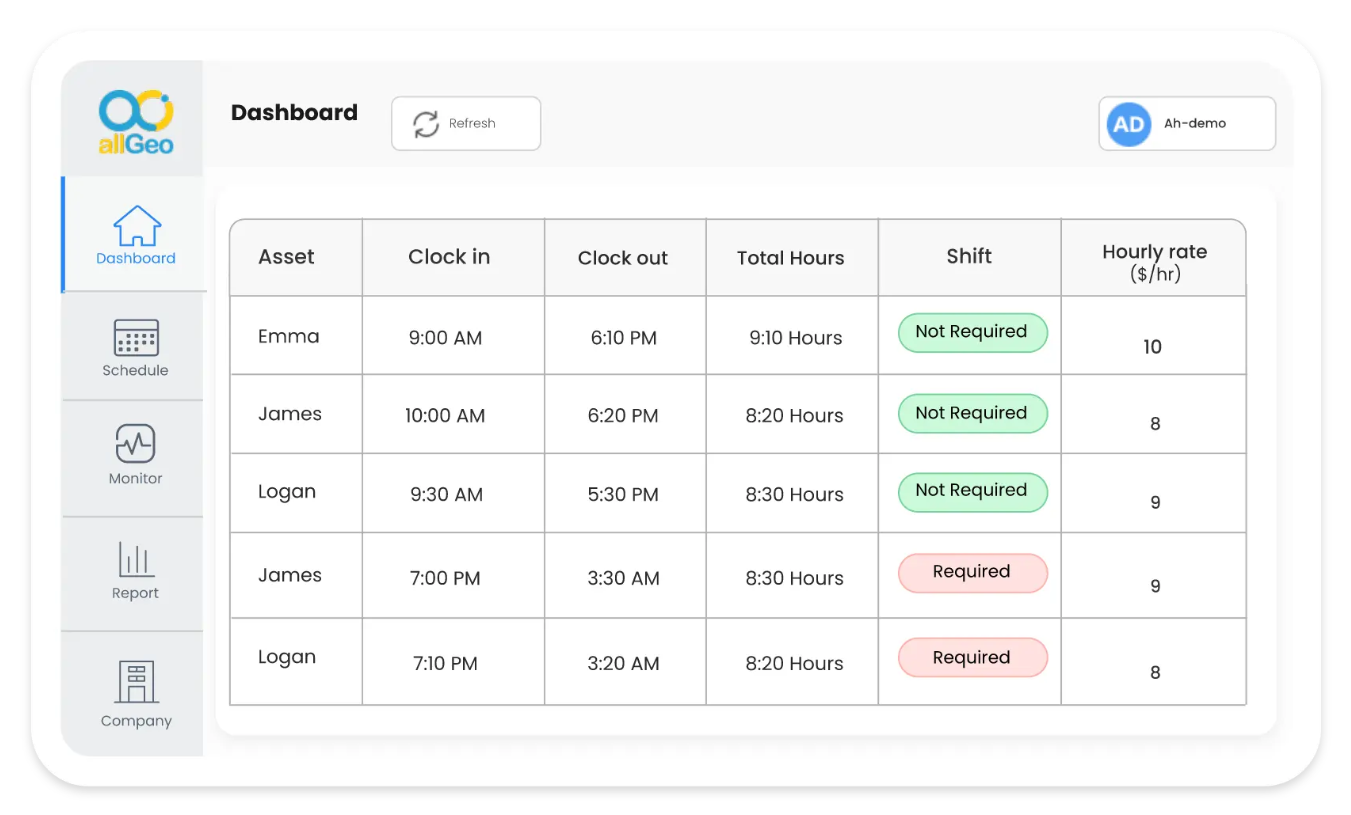
One instance of third-party integration is with well-liked payroll administration methods. Integrating with a devoted payroll platform permits for a seamless change of worker information, schedules, attendance data, and area exercise logs in each instructions. This real-time integration automates the transmission of payroll-related data from the sphere service software to the payroll system, lowering the necessity for handbook enter.
Customers can effectively observe time spent on duties, jobs, and buyer engagements, aiding in labor estimation and job costing. The system helps the technology of scheduled and ad-hoc stories based mostly on numerous parameters akin to worker teams, clients, and work orders.
Customizable configurations for time beyond regulation and double time beyond regulation guidelines can be found to streamline payroll administration. By this integration, time clock and payroll information are harmoniously synchronized, bolstering operational effectivity throughout the payroll and area service operations.
Supply: allGeo
ERP integration for job costing effectivity
The mixing of enterprise useful resource planning (ERP) methods with job costing software program or modules permits an organization to robotically switch and replace data associated to prices, sources, labor, and supplies related to particular jobs or tasks straight throughout the ERP system. This integration permits the corporate to estimate and invoice their purchasers for particular tasks precisely.
This built-in method permits building managers to see a complete view of all prices related to a venture, together with labor, supplies, and overhead, in actual time.
6. Subject information assortment
Subject information assortment tendencies have advanced in response to technological developments, enterprise necessities, and market dynamics. Regulatory mandates are additionally pushing corporations to undertake extra rigorous information assortment practices.
Companies are shifting to cell options that allow real-time synchronization with central databases, eliminating the necessity for handbook information entry.
Subject inspectors can effortlessly gather numerous information varieties, akin to duties, notes, QR scans, signatures, and picture uploads, all throughout the similar cell platform. This transition from conventional paper types accelerates the information assortment course of but in addition saves priceless time and sources.
Sensible types add one other layer of sophistication to time monitoring and workforce administration. These dynamic digital types adapt based mostly on the enter they obtain, guiding customers by way of a custom-made workflow to seize detailed and related data effectively.
For example, a wise type for a building agency’s website supervisor may change the questions it presents based mostly on the kind of work being reported, akin to electrical, plumbing, or structural, guaranteeing that solely pertinent data is collected for every job.
This development underscores how corporations leverage cell know-how in area providers to optimize operations, enhance information accuracy, and in the end ship superior service to purchasers.
Knowledge assortment utilizing cell types
In a utilities firm tasked with inspecting and sustaining electrical infrastructure, cell types play a pivotal position in gathering real-time information to make sure operational effectivity and security. Equipping area technicians with cell units loaded with custom-made inspection types permits them to report crucial information on the situation of kit and establish potential points promptly.
For example, technicians can enter data akin to tools standing, meter readings, and observations straight into the cell types throughout routine inspections. If any anomalies or potential hazards are detected, technicians can instantly flag them within the type, triggering alerts for additional motion.
This proactive method not solely enhances the protection and reliability of the infrastructure but in addition empowers the corporate to plan upkeep actions, reduce downtime, and guarantee seamless operations.
7. Synthetic intelligence for workforce optimization
Synthetic intelligence (AI) functions have modified the dynamics of each business. AI-driven instruments make the most of superior algorithms to research huge information and streamline workforce administration processes. For example, AI could be utilized to forecast labor demand and optimize scheduling and useful resource allocation.
Examples of AI-driven workforce optimization instruments embody software program that forecasts staffing wants based mostly on historic information and real-time insights. Moreover, scheduling platforms robotically generate optimized schedules, contemplating elements like worker preferences, abilities, and availability.
Whereas integrating AI into workforce administration provides quite a few advantages, akin to improved operational effectivity, value financial savings, and enhanced decision-making, there are potential challenges to think about, too.
These embody information privateness issues, the necessity for expert personnel to handle AI methods, and guaranteeing transparency and equity in AI-driven decision-making processes.
Nonetheless, using AI in workforce optimization holds immense promise in driving organizational success and competitiveness within the area service business.
Way forward for area service administration with AI
The way forward for AI holds immense potential for revolutionizing workforce administration practices within the area providers business.
As AI know-how advances, companies can anticipate extra refined options that may automate complicated decision-making processes, optimize useful resource allocation, and improve scheduling and routing effectivity.
Moreover, AI-driven predictive upkeep capabilities will allow area service corporations to anticipate and forestall tools failures, minimizing downtime and elevating buyer satisfaction.
By leveraging AI-driven insights and automation, corporations can anticipate to streamline their workforce optimization efforts, enhance productiveness, and drive enterprise success within the evolving digital panorama.
Affect of area service administration tendencies on main industries
Let’s have a look at a number of the industries which are impacted by these area service administration tendencies.
1. Building
Rising applied sciences like drones, autonomous autos, and robotics are revolutionizing the productiveness of building employees. Building companies are streamlining duties and lowering handbook labor utilizing these applied sciences. Collaborative robots additional enhance effectivity by helping employees in repetitive duties, whereas superior supplies and building methods speed up venture timelines and promote sustainability.
Workforce administration software program concurrently manages inspection, monitoring, and security. The development administration software program market is projected to develop considerably, with an estimated worth set to achieve $15.20 billion by 2029, at a CAGR of 9.33% through the forecast interval.
This growth aligns with the burgeoning panorama of SaaS companies, numbering roughly 17,000 in the US alone final yr, collectively serving over 59 billion clients worldwide.
2. House healthcare
The mixing of digital well being data (EHR) methods, AI, machine studying, and the web of issues (IoT) is considerably reworking residence healthcare workforce administration. It improves affected person care high quality and optimizes workforce productiveness by automating routine duties.
Superior digital go to verification methods supply centralized and safe platforms for assembly compliance necessities and affected person information administration. Healthcare suppliers can entry real-time affected person data, streamlining care supply and lowering administrative burdens.
AI and machine studying applied sciences improve diagnostics and predictive capabilities, enabling early illness detection and extra correct affected person final result predictions.
Moreover, IoT units akin to sensible scales, blood strain displays, and glucose meters allow distant affected person monitoring, offering healthcare professionals with complete insights into affected person well being standing and facilitating proactive interventions.
3. Services administration
Services administration is experiencing a shift towards preventive and predictive upkeep methods pushed by tools monitoring instruments and information analytics. Clever instruments for asset efficiency monitoring and predictive upkeep allow facility managers to establish and tackle potential tools failures, enhancing operational effectivity and security.
Together with these developments, software program options for monitoring belongings and mobilizing groups are additionally turning into a part of workforce administration. These options allow managers to pinpoint issues inside buildings and schedule upkeep throughout non-peak hours, minimizing disruptions to occupants.
By adopting preventive measures by way of real-time location intelligence, services administration groups can mitigate overhead prices and cut back enterprise downtime, in the end optimizing workforce productiveness and useful resource allocation.
The long run is now: embracing change in area service administration
The tendencies mentioned, starting from the mixing of rising applied sciences like drones and AI in area operations to the emphasis on sustainable practices and data-driven decision-making, underscore a pivotal shift in area service administration. By embracing these transformative tendencies, companies stand poised to revolutionize their operations, elevating effectivity, service high quality, and competitiveness available in the market.
To navigate this dynamic panorama efficiently, it’s crucial for organizations to stay agile, spend money on innovation, and stay attuned to evolving buyer calls for. By proactive adaptation and strategic implementation, companies cannot solely meet the challenges of right this moment but in addition thrive amidst the alternatives of tomorrow within the area service administration business.
Seeking to rent high expertise to your area service technician crew? Discover 5 efficient recruitment methods to search out the very best candidates for the job!
Edited by Supanna Das