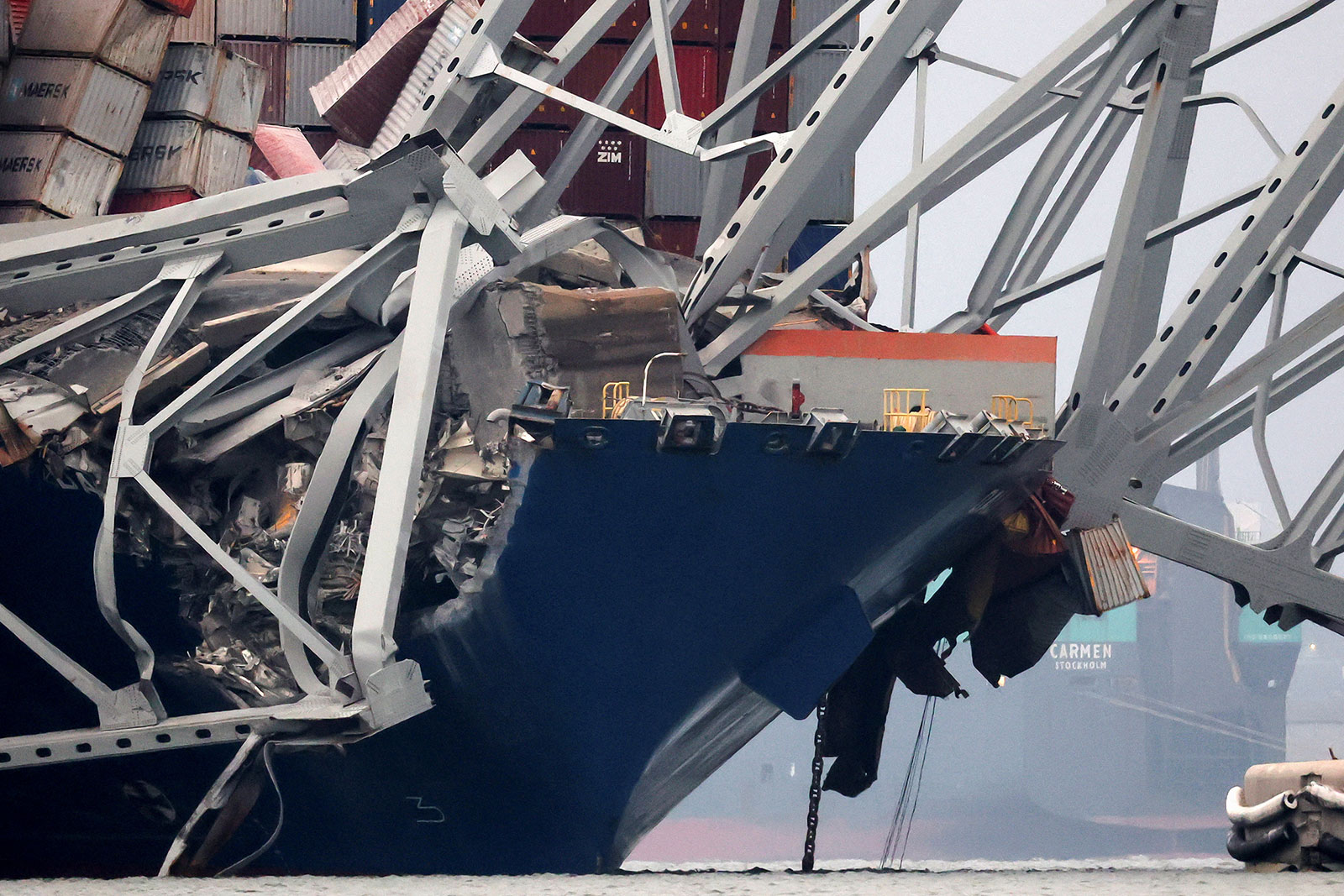
Within the early hours of Tuesday morning, the worldwide provide chain and US coastal infrastructure collided within the worst potential approach. An unlimited container ship, the Dali, slammed right into a assist of the Francis Scott Key bridge in Baltimore, crumpling its central span into the Patapsco River and chopping off the town’s port from the Atlantic Ocean.
Baltimore Bridge Collapse, Latest –
Eighteen hours later, at roughly 7:30 pm Tuesday night, rescuers known as off the search, with six lacking individuals presumed lifeless.
Key Bridge: 47-year-old Baltimore Bridge Collapse
With the wreckage but to be cleared, the Port of Baltimore—a vital delivery hub—has suspended all water visitors, in response to the Maryland Port Administration, although vans are nonetheless shifting items out and in of the world. Baltimore is the ninth busiest port within the US for worldwide commerce, that means the results of the crash will ripple throughout the regional, US, and even international financial system for nevertheless lengthy the 47-year-old bridge takes to repair—a timeline, specialists say, that’s nonetheless unclear.
This will likely be a particular ache for the auto, farm gear, and building industries, as a result of Baltimore handles essentially the most “roll on, roll off” ships on the US east coast—an business time period for these designed to deal with wheeled cargo. The port has the particular gear to maneuver these merchandise, employees educated in learn how to use it, and, critically, a location inside an in a single day driving distance of the densely populated Japanese Seaboard and closely farmed Midwest.
Nearly 850,000 vehicles and light-weight vans got here by way of the port final 12 months. So did 1.3 million tons of farm and building equipment.
Happily for the logistics business, there are some various routes each for ships coming into port and vans crossing the river. Two tunnels traverse the Patapsco, and will take a number of the items and folks that when traveled throughout the Key Bridge, which was additionally a part of Maryland Route 695. Close by ports, together with Norfolk in Virginia, Philadelphia in Pennsylvania, and Savannah in Georgia, ought to be capable to settle for most of the items often dealt with by Baltimore’s port.
However the delivery image will get extra sophisticated the longer the catastrophe takes to resolve. Ships haul large, heavy items in massive portions throughout oceans, albeit comparatively slowly—that means adjustments to their routes and locations can add lots of time to a journey. If a ship is hauling a bunch of various cargos for a bunch of various industries, a holdup alongside the best way causes lots of people to be screaming for his or her provides.
“Everyone proper now could be saying, ‘We’re simply going to reroute, it’s going to be tremendous,’” says Nada Sanders, an knowledgeable in provide chain administration at Northeastern College. “If this lasts some time, it’s not going to be tremendous. It’s going to affect costs.”
Larger Ships, Similar Bridge
The destruction of the bridge additionally underlines that boats are getting greater. Commerce transport quantity throughout the seas has tripled within the final three a long time. At practically 1,000 toes lengthy, the Dali is emblematic of the ballooning delivery business.
The expansion of boats is all the way down to easy economics: The extra items you possibly can cram on a ship, the extra you save on prices. “The quantity of cargo has elevated tremendously,” says Zal Phiroz, a provide chain analyst on the College of California, San Diego. “This has been impacted to an excellent diploma by Covid, and after Covid as properly. The costs of cargo skyrocketed, the costs of containers skyrocketed. The whole lot simply went by way of the roof.”